The speaker slate spans academia and industry and brings together model design, benchmark development, scientific machine learning, and production-scale temporal systems.
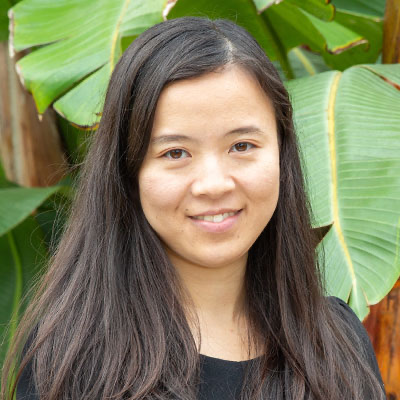
Professor, Computer Science and Engineering, UC San Diego
Her research develops physics-guided deep learning for spatiotemporal data, including generative models for spatiotemporal sequences and physics-informed neural networks. Her work on multimodal LLM agents and irregular temporal structures engages the workshop's themes of inductive biases and missing-data handling.
Homepage·Scholar
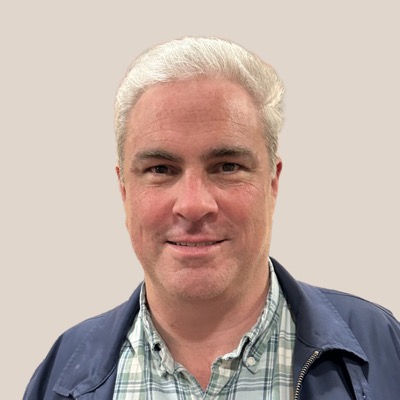
Professor of Statistics, UC Berkeley; Director, Big Data Group, ICSI; Group Lead, LBNL; Amazon Scholar
He pioneered randomized numerical linear algebra and collaborated on the Chronos and Chronos-2 time-series foundation models. His work on scaling and transfer behaviour of foundation models for scientific machine learning engages the workshop's themes of scaling laws and evaluation rigor.
Homepage
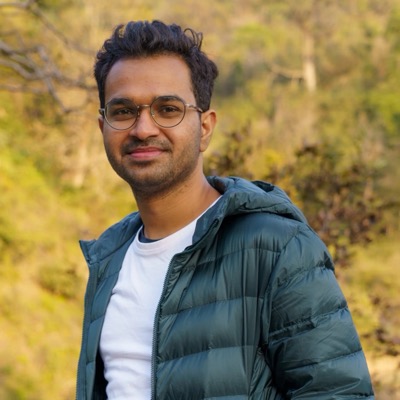
Senior Applied Scientist, AWS
He works on large-scale time-series foundation models and leads development of the Chronos family, with prior work on diffusion-based probabilistic forecasting. His work on tokenization-based pretraining and zero-shot transfer engages the workshop's themes of foundation-model design and operationalization.
Homepage·Scholar
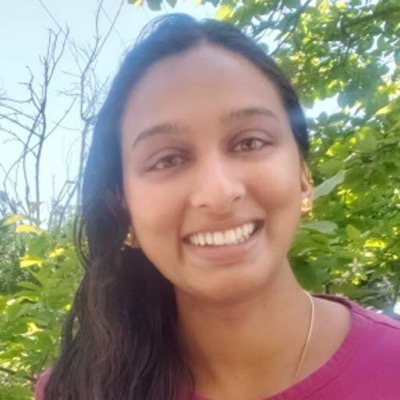
Assistant Professor, Chemical and Biomolecular Engineering and EECS, UC Berkeley; BAIR; Faculty Scientist, LBNL
Her research develops physics-inspired machine learning integrating physical inductive biases, geometric structure, and differentiable physics, with applications to fluid dynamics and neural PDE solvers. Her work engages the workshop's themes of physics-informed temporal modeling and reliability on continuous-time dynamics.
Homepage·Scholar
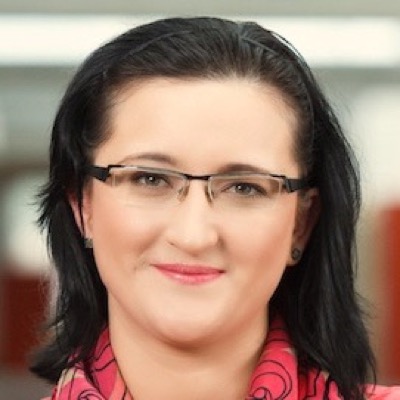
Associate Professor of Biomedical Informatics, Harvard Medical School; founder, Therapeutics Data Commons
Her group co-developed UniTS, a multi-task time-series model handling classification, forecasting, imputation, and anomaly detection. Her work on multi-task temporal foundation models and biomedical time-series heterogeneity engages the workshop's themes of multimodal temporal learning and reliability in safety-critical domains.
Lab·Scholar

Associate Professor, Department of Data Science and AI, Monash University
He co-authored the MONSTER benchmark for scalable time-series classification and SETAR-Tree, a global tree-based forecasting method. His work on principled model selection and information-theoretic complexity engages the workshop's themes of benchmark realism and evaluation rigor.
Profile
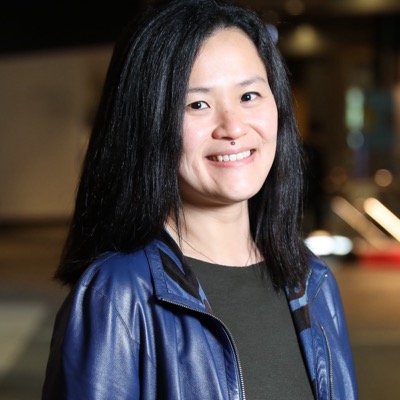
Professor of AI and Machine Learning, School of Computer Science and Engineering, UNSW Sydney; Deputy Director, UNSW AI Institute
Her research focuses on data-efficient learning with multimodal sensor data, spatio-temporal modeling, and continual learning, applied to transport and urban systems. Her work engages the workshop's themes of multimodal forecasting and distribution-shift-aware evaluation.
Homepage·Scholar
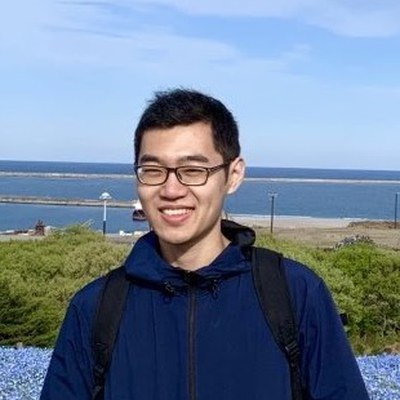
Senior Director, AI Research, Salesforce
He leads Salesforce's research on time series, computer-use agents, and multimodal AI, and was the founding researcher of its Singapore team. He is the lead author of BLIP and BLIP-2, among the most widely adopted vision-language pre-training methods, with more than 40,000 citations, and previously co-founded Rhymes.AI as Chief Multimodal Scientist. His work engages the workshop's themes of multimodal temporal modeling and foundation-model design.
Scholar
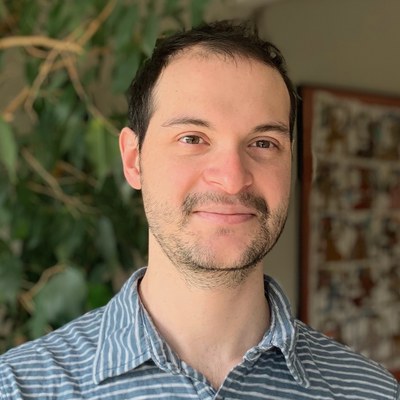
Assistant Professor of Physics, The University of Texas at Austin
His group develops theory and algorithms for the analysis and control of chaotic systems, bridging fluid dynamics, statistical learning, and systems biology. He created dysts, a widely used library of several hundred strange attractors, and led Panda, a forecast model pretrained purely on simulated chaotic systems that transfers zero-shot to unseen dynamics and real experimental time series. His work engages the workshop's themes of neural scaling laws and simulation-based pretraining for temporal dynamics.
Homepage·Panda·dysts